Shed Pads
Level Foundations That Prevent Structural Settling
Shed Pads in Augusta for properties needing stable bases under storage buildings and prefabricated structures
A shed sitting on an unlevel or settling foundation develops door misalignment, floor sag, and structural racking that worsens each season. Todd Concrete Solutions pours shed pads that remain level under the building's weight, drain water away from the structure, and provide anchor points that resist wind uplift during storms. The pad must account for the shed's dimensions, door swing clearance, and whether the structure will hold lawn equipment, tools, or heavier items like ATVs or workshop supplies.
Shed pad construction differs from full slabs because the goal is a stable perimeter foundation rather than an interior floor system. The concrete supports the shed's frame at its bearing points, extends beyond the building footprint to prevent erosion undermining the edges, and slopes enough to shed rainwater without creating tripping hazards at the entry.
Request an evaluation to confirm your shed's dimensions, soil conditions, and whether local codes apply to your property.
What Determines Shed Pad Performance
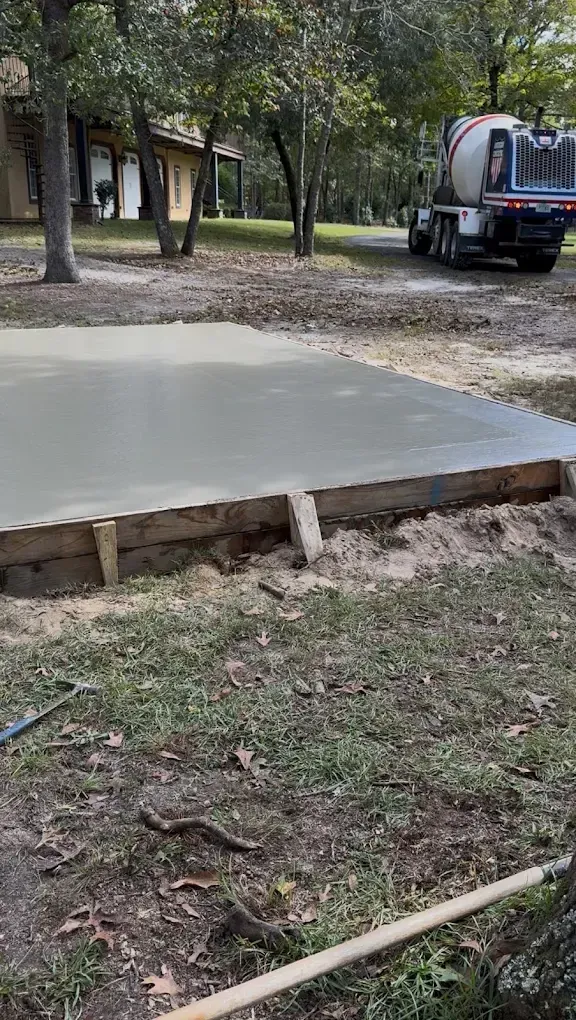
We begin by confirming the shed manufacturer's foundation requirements, which specify minimum pad dimensions, thickness, and whether anchor bolts must embed in the concrete. The site's slope, soil type, and proximity to property lines determine whether grading is needed before forming. In Augusta, clay soils that retain moisture require compacted aggregate bases that prevent the pad from settling unevenly as the ground expands and contracts with seasonal moisture changes.
Once installed, the shed sits level with doors that open and close without binding, floors that do not develop gaps along walls, and anchor points that hold the structure secure during high winds. The pad edges remain exposed above grade so water drains away rather than pooling against the building or saturating the base.
Depending on shed size and local jurisdiction, permits may apply to structures exceeding square footage limits or those placed within setback zones. Some neighborhoods require approval before adding outbuildings, which affects project timing and whether engineered drawings are necessary.
Shed Pad Questions Homeowners Ask
Clarity on sizing, placement, and regulatory requirements helps property owners plan shed installations that avoid costly adjustments later.
- How much larger should the pad be than the shed? Pads typically extend two to four inches beyond the shed on all sides to provide a stable bearing surface and prevent rainwater from eroding soil directly beneath the structure's edges.
- What thickness works for typical storage sheds? Four-inch thickness handles most residential storage sheds, but larger buildings, sheds holding heavy equipment, or structures with loft storage may require thicker concrete to prevent cracking under concentrated loads.
- How does Augusta's soil affect shed pad stability? Expansive clay soils shift with moisture changes, so proper base preparation and compaction prevent the pad from tilting or cracking as the ground moves seasonally beneath it.
- Do shed pads require permits? Permit requirements depend on shed size, placement relative to property lines, and whether the structure includes electrical or plumbing connections, with regulations varying by local jurisdiction.
- What happens if the pad is not level when poured? An out-of-level pad causes the shed frame to twist, doors to bind, and floors to slope, creating problems that cannot be corrected without shimming or releveling the entire structure.
Shed pads provide lasting performance when they account for the building's weight distribution, site drainage, and soil characteristics specific to your property. Todd Concrete Solutions sizes and constructs each pad according to manufacturer specifications and site conditions rather than using generic dimensions. Contact us to discuss your shed model, placement location, and any site preparation needed before installation.
