
Patio Extensions
Expanding Outdoor Space Beyond Current Limits
Patio Extensions in Augusta for properties where the existing patio no longer accommodates outdoor furniture and activity needs
An existing patio that is too small forces furniture into the yard or limits how the outdoor space can be used, and a patio extension solves that problem by adding square footage that integrates structurally and visually with the original surface. Todd Concrete Solutions installs patio extensions that tie into existing concrete using rebar dowels, match the elevation and slope of the current patio, and maintain proper drainage away from the home. The project begins by assessing whether the existing patio is structurally sound and whether its drainage pattern will remain effective once the extension is added.
The extension must connect to the existing slab without creating a visible seam that collects water or develops a height difference over time, which requires sawcutting the edge of the old patio, drilling for dowels, and ensuring the new section is poured at the correct elevation. Subgrade preparation for the extension mirrors the original installation—organic material is removed, the soil is compacted, and a rock base is added if soil conditions require it.
Schedule a property evaluation to determine how much additional space your layout requires and how the extension will integrate with existing conditions.
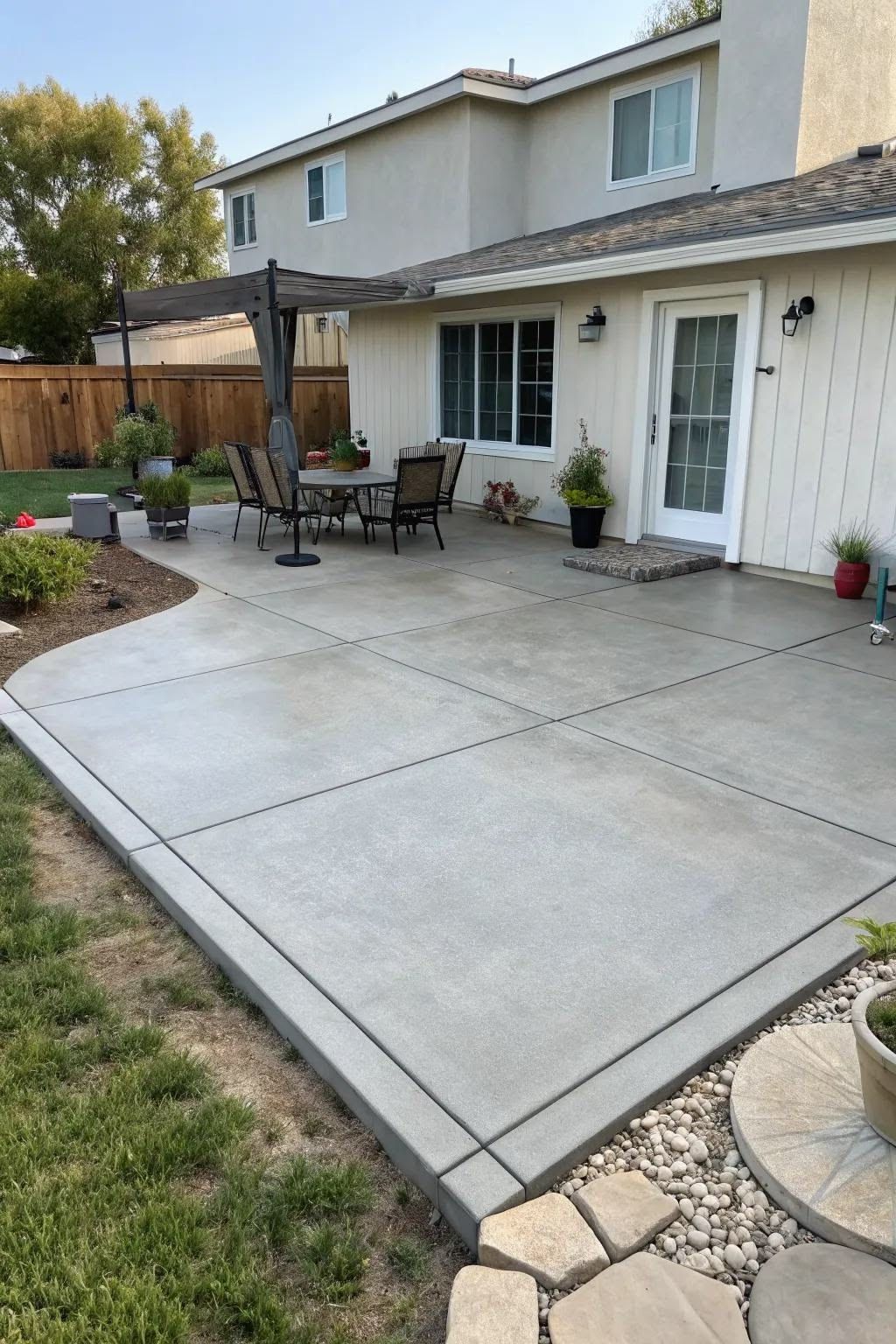
What You Notice Once Extension Work Is Finished
Before the extension is poured, the edge of the existing patio is sawcut to create a clean joint line, and rebar dowels are drilled into the old concrete and extended into the area where the new section will be placed. These dowels create a mechanical connection that prevents the two sections from separating or moving independently as the ground shifts with seasonal moisture changes. The extension is formed, poured, and finished to match the texture and slope of the original patio.
Once the work is complete, the patio will function as a single, continuous surface without trip hazards or visible height differences at the joint. Water will continue to drain away from the home across both the original and extended sections, and outdoor furniture can be arranged across the full area without worrying about uneven surfaces or soft spots. The joint between old and new concrete will remain stable rather than opening into a gap or developing a step as the seasons change.
If the existing patio shows signs of settling or cracking, those issues are addressed before the extension is added—pouring new concrete adjacent to a failing section does not correct the original problem and often results in the extension settling at a different rate. Control joints in the extension are planned to align with the pattern in the existing patio, maintaining a consistent appearance and managing stress points.
What Property Owners Usually Ask
Homeowners considering a patio extension often want to understand how the new section will connect to the existing surface and what site conditions affect the project.
- How do you tie the extension into the existing patio? The edge of the old patio is sawcut to create a clean, vertical face, then holes are drilled into the existing concrete at regular intervals. Rebar dowels are epoxied into these holes and extend into the new pour, creating a mechanical tie that prevents movement between the two sections.
- What happens if the existing patio has drainage problems? Any drainage issues with the original patio are evaluated before the extension is designed, since adding square footage can worsen existing problems if water flow is not planned correctly. In some cases, the extension is sloped to redirect water more effectively, or drainage solutions like channel drains are incorporated.
- Why does the subgrade need to match the original patio preparation? If the extension subgrade is not prepared to the same standard as the original patio, the new section may settle or crack differently, creating a visible seam or height difference at the joint. Matching the preparation ensures both sections perform consistently over time.
- How long after pouring can furniture be placed on the extension? Foot traffic is safe within one to two days in typical Augusta weather, but heavier items like furniture and grills should be kept off the surface for at least seven days to allow proper curing. Dragging heavy objects across the new concrete during the first week can damage the surface.
- What factors affect how large the extension should be? The size depends on how you plan to use the space—whether it needs to accommodate a dining set, lounge furniture, a grill station, or a combination of features. Adequate clearance around furniture and walking paths should be factored into the layout to avoid creating a cramped area that does not function well.
Todd Concrete Solutions inspects the existing patio condition and drainage performance before designing an extension that integrates properly and expands usable outdoor space. Request a consultation to review your current patio layout and discuss extension options that suit your property.
