
New Concrete Patios
Outdoor Living Space That Handles Weather
New Concrete Patios in Augusta for homeowners adding functional outdoor areas to the rear or side of the home
A new concrete patio creates usable outdoor space for furniture, grills, and gatherings while providing a surface that withstands Augusta's summer heat, seasonal rain, and temperature swings without the maintenance demands of wood decking. Todd Concrete Solutions installs new concrete patios that address drainage around the home, integrate with existing door thresholds and landscaping, and accommodate the homeowner's layout preferences for size and shape. The installation starts with evaluating how water currently drains away from the foundation and how the patio slope will maintain that flow rather than redirecting runoff toward the house.
Site preparation involves removing sod and organic material, then grading the area to establish the slope that will carry water away from the structure. The subgrade is compacted, and a rock base is installed where soil conditions or patio size require additional support beneath the concrete. Forms are set to define the patio perimeter and control the finished elevation relative to door sills, existing walkways, and yard grade.
Arrange an on-site consultation to review threshold heights, drainage paths, and layout options for your property.
What Changes After Installation Completes
The patio installation begins with setting forms that define the shape and establish the slope, typically one-quarter inch per foot, to move water away from the home. Once the base is prepared and inspected, concrete is placed, screeded level, and finished to the texture the homeowner selected—whether that is a broom finish for traction, a smooth trowel finish, or a decorative option like stamping or staining. Control joints are cut or formed to manage cracking patterns as the concrete expands and contracts with temperature.
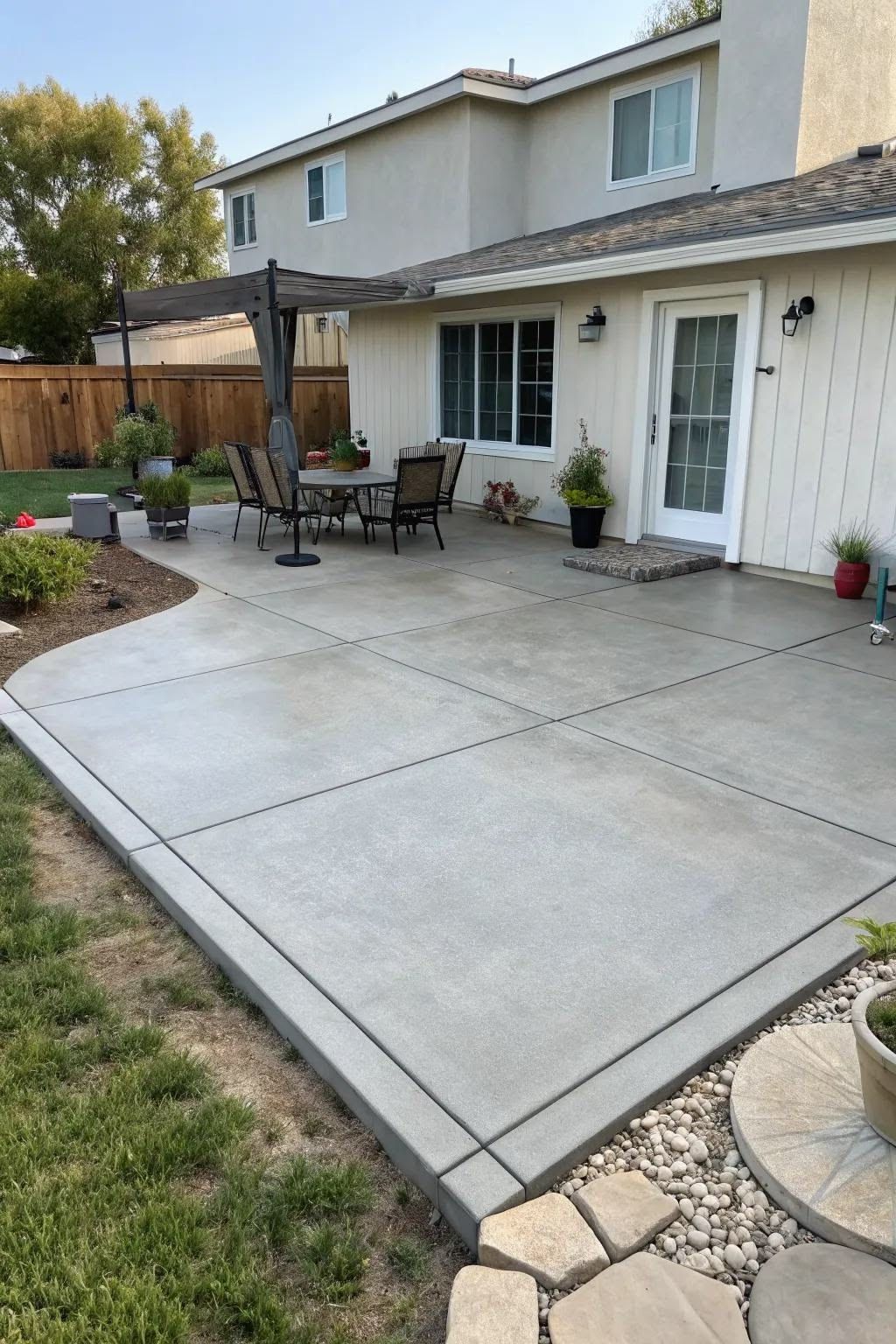
When the patio is complete, you will have a level, stable surface that drains properly and supports outdoor furniture without sinking or shifting. Rainwater sheets off the surface and flows away from the foundation rather than pooling near the house, and the concrete resists cracking and surface deterioration better than alternatives like pavers or gravel that require ongoing leveling and weed control. The transition from the door threshold to the patio surface will be smooth, and the finished elevation will match the surrounding yard grade without creating awkward steps or drainage reversals.
For patios adjoining existing concrete walkways or stoops, rebar dowels tie the new section to the old, preventing separation at the joint. In cases where tree roots or underground utilities affect the layout, adjustments are made during planning to route the patio around obstacles without compromising drainage or requiring future cuts through the finished surface.
Common Questions About This Service
Homeowners planning a new patio often have questions about the design and construction decisions involved.
- What factors determine the thickness of a patio slab? Most residential patios are poured at four inches thick, which handles typical foot traffic and outdoor furniture loads. If the patio will support heavier features like outdoor kitchens, fire pits with masonry surrounds, or hot tubs, the thickness increases and additional reinforcement is added.
- How do you prevent the patio from settling or cracking? Proper subgrade preparation and compaction prevent settlement, and control joints manage where cracking occurs as the concrete responds to temperature changes. In Augusta's clay soils, a compacted rock base is often added beneath the patio to provide a stable, moisture-resistant layer that reduces movement from seasonal soil expansion and contraction.
- Why does slope matter for a patio installation? The slope carries water away from the foundation and prevents pooling on the patio surface. A slope of one-quarter inch per foot is standard, providing drainage without creating a noticeable tilt that affects furniture placement or walking comfort.
- When should a patio be sealed after installation? Sealing is optional and depends on whether the homeowner wants to reduce surface moisture absorption or make cleaning easier. If sealing is desired, it should occur after the concrete has cured for at least thirty days, allowing internal moisture to escape before a topical barrier is applied.
- What preparation happens before the concrete is poured? The area is excavated to remove sod and unstable material, then graded to establish the correct slope. Forms are installed around the perimeter to contain the concrete and set the finished elevation. If a rock base is needed, it is spread and compacted before the pour, and any reinforcement like wire mesh or rebar is positioned inside the forms.
Todd Concrete Solutions evaluates door threshold elevations, drainage paths, and soil conditions during the planning process to avoid future settling or drainage issues. Request a planning session to discuss your outdoor living goals and site-specific layout considerations.
