Equipment Pads
Stable Platforms for Mechanical Systems
Equipment Pads in Augusta for properties requiring code-compliant bases under HVAC units, generators, and outdoor machinery
HVAC condensers, standby generators, pool equipment, and electrical transformers require level, stable platforms that prevent vibration transmission, allow drainage, and meet manufacturer installation specifications. Equipment pads must support the unit's operating weight, resist settling that throws the system out of level, and position the equipment at the correct height for electrical connections and service access. When these pads settle or crack, equipment efficiency drops, vibrations transfer into the building, and warranty coverage may be voided due to improper installation.
Todd Concrete Solutions designs equipment pads around the specific unit's footprint, weight, and clearance requirements outlined in installation manuals. The pad must account for refrigerant line routing, electrical conduit placement, and whether local codes mandate specific setbacks from property lines or minimum distances from building foundations.
Arrange a site visit to review equipment specifications, utility routing, and placement options that meet code requirements.
Why Equipment Pads Demand Precision
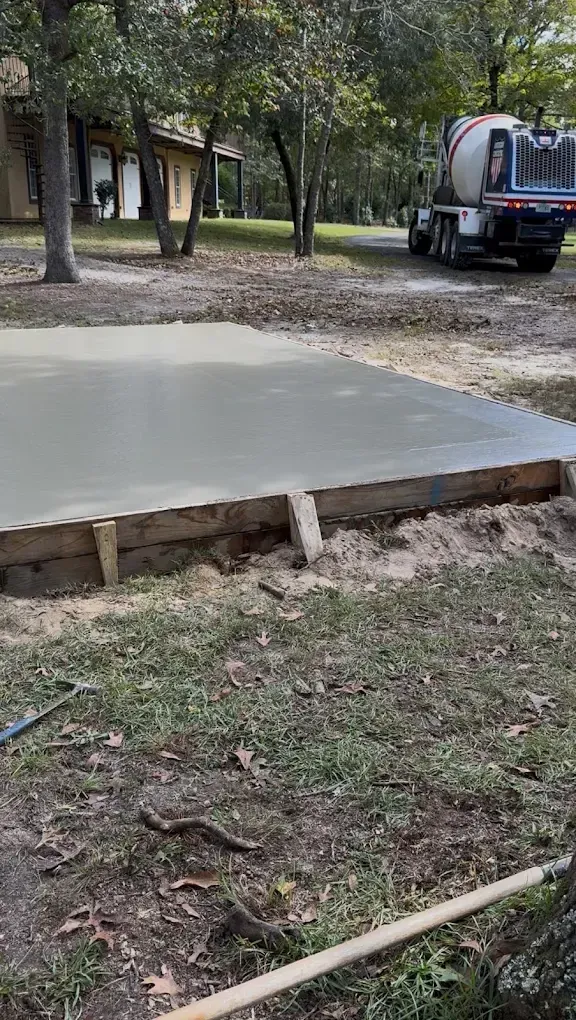
The construction starts with verifying the manufacturer's pad size, thickness, and levelness tolerances, which are often stricter than general flatwork because equipment performance depends on remaining level during operation. The pad must be sized to support the unit's mounting feet without overhanging the concrete edges, positioned to allow airflow around the equipment, and elevated enough to prevent water pooling beneath the unit. Generator pads often require additional considerations like fuel line access, exhaust clearance, and whether the installation requires permit approval and electrical inspection.
After installation, the equipment sits level across its mounting points, operates without transmitting vibration into the building structure, and remains accessible for filter changes and seasonal maintenance. The pad drains water away from the unit and does not develop cracks that allow settling under the equipment's weight or vibration cycles.
These projects may involve coordination with HVAC contractors, electricians, or plumbers who connect systems after the pad cures. Inspections can be required before equipment is set, particularly for generators or commercial systems where the installation affects building code compliance.
Frequent Equipment Pad Questions
Property owners planning equipment installations benefit from understanding how pad design affects system performance and regulatory compliance.
- What size should the equipment pad be? Pads are sized according to manufacturer specifications with enough perimeter clearance to support mounting hardware and allow service access without standing on soil or turf that compacts over time.
- How level must the pad be for proper operation? Most HVAC and generator systems require levelness within one-quarter inch across the pad to function correctly, prevent oil migration in compressors, and avoid voiding manufacturer warranties.
- Why does soil type in Augusta matter for equipment pads? Clay soils that expand with moisture can shift the pad out of level, affecting equipment operation and efficiency, which makes proper base preparation critical for long-term stability.
- When do equipment pads require permits? Generator installations, commercial HVAC systems, and equipment that ties into building electrical panels often require permits and inspection before the utility company provides final connection approval.
- How thick should an equipment pad be? Four inches is standard for residential HVAC units, but larger systems, generators with fuel tanks, or commercial equipment may require increased thickness based on weight and vibration characteristics.
Equipment pads must meet installation standards that go beyond simply pouring a flat slab. Todd Concrete Solutions builds these platforms according to manufacturer requirements, code compliance, and long-term performance criteria. Contact us to discuss your equipment model, site conditions, and any permit or inspection requirements that apply to your installation.
