Putting Greens
Surfaces Built for Consistent Ball Roll
Putting Greens in Augusta for homeowners wanting practice areas that require proper grading, drainage integration, and base stability beneath the synthetic turf surface
Augusta's clay soil and seasonal rainfall patterns affect how putting green installations perform over time. Todd Concrete Solutions prepares putting green projects by addressing subsurface drainage, base compaction, and grading requirements that determine whether the finished surface maintains consistent ball roll or develops low spots where water pools and turf backing deteriorates. The visible putting surface is only the final layer of a construction process that begins with site evaluation and soil removal. You need this service when adding a backyard practice area that must drain efficiently during heavy rain, remain level without settling, and integrate visually with the surrounding landscape rather than appearing as an isolated artificial patch.
Installation begins with excavating the designated area to a depth that accommodates the base layers required for stability and drainage. The subgrade is compacted and graded to create slopes that direct water toward drainage outlets, and aggregate base material is installed in lifts to prevent future settling that would create surface irregularities. A drainage system may be incorporated beneath the base to handle runoff, particularly in areas where surrounding grades direct water toward the green. The synthetic turf is then installed over the prepared base, with seams positioned to minimize visibility and edges secured to prevent lifting or separation from the base.
Arrange an on-site consultation to evaluate grading conditions and discuss drainage integration for a putting green installation on your property.
Why Base Preparation Determines Long-Term Performance
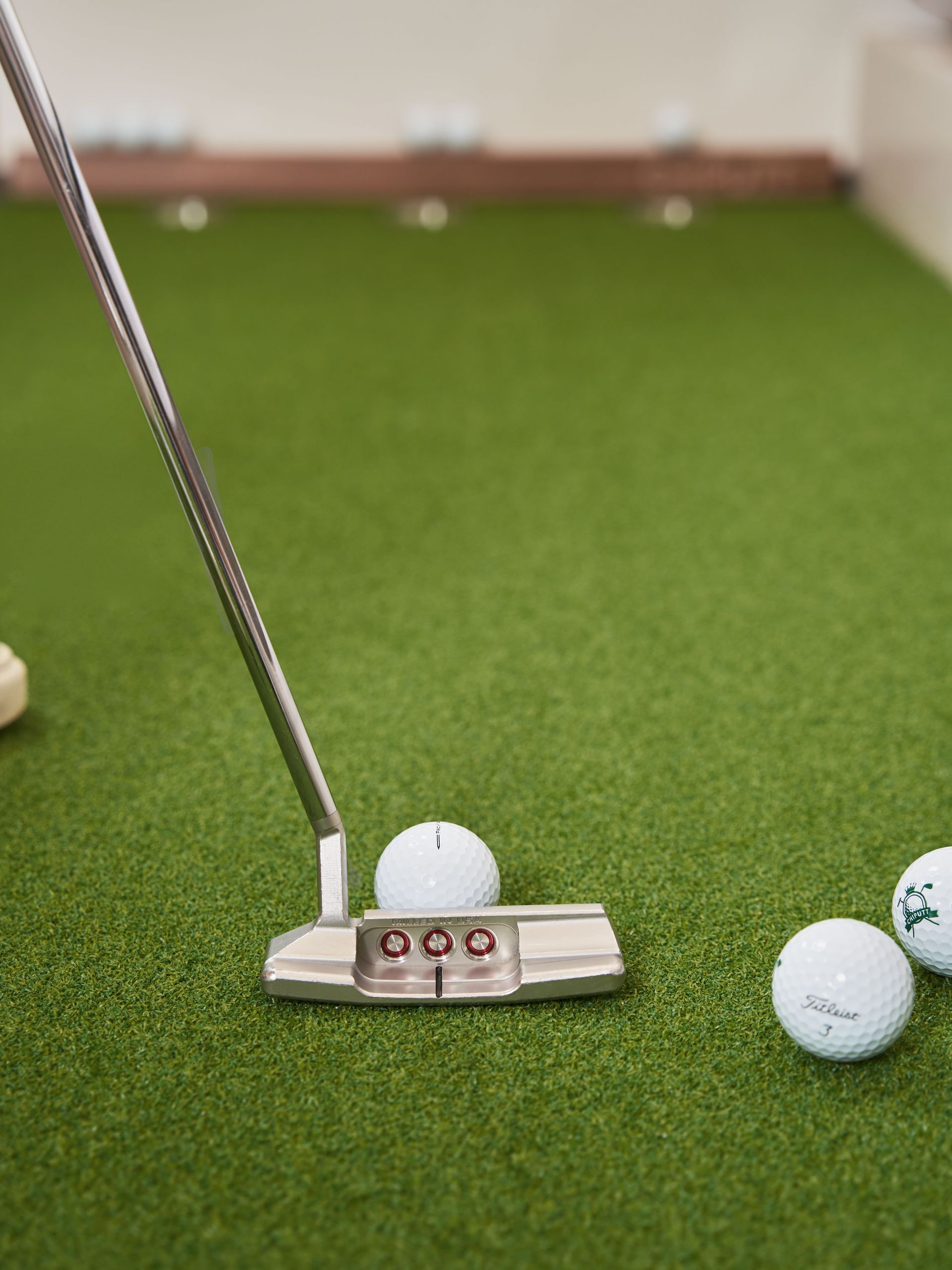
The base must remain stable through seasonal moisture changes that cause Augusta's clay soil to expand in wet months and contract during dry periods. Proper compaction prevents settling that would create depressions where water collects and ball roll becomes inconsistent. Grading ensures that the finished surface slopes gently toward drainage points without creating noticeable humps or valleys that affect putting accuracy. Edging details determine how the green transitions into surrounding lawn, mulch, or hardscape without visible gaps or height mismatches that detract from the installation's appearance.
After installation, you will notice a putting surface that drains quickly after rain without developing standing water, maintains consistent ball speed across the entire area, and remains level without low spots or edges that lift over time. The green integrates visually with the surrounding landscape, and the turf surface withstands regular use without developing worn areas or seam separation.
Putting green projects often involve grading adjustments beyond the immediate installation area to manage how water approaches and drains from the green. Landscaping around the perimeter may need adjustment to create smooth transitions, and irrigation systems should be modified to avoid overspray onto the synthetic surface. Quality installations account for these integration details rather than focusing solely on the turf product itself.
Questions Before Starting Your Project
Homeowners planning putting green installations typically want to understand how site conditions affect construction decisions and what preparation ensures the surface performs as intended.
What site preparation is required before turf installation begins?
The area is excavated to remove existing soil and vegetation, the subgrade is compacted and graded to create proper drainage slopes, and aggregate base material is installed in layers and compacted to provide a stable foundation that will not settle or shift over time.
How does drainage get managed beneath the putting green?
Grading directs surface water toward the edges of the green where it drains into surrounding landscape areas, and in situations where surrounding grades direct significant runoff toward the green, subsurface drainage lines may be installed beneath the base to prevent water accumulation that would cause the turf backing to deteriorate.
When does a putting green installation require adjustment to surrounding grades?
If the property slopes toward the planned green location or if existing drainage patterns would direct water across the surface, surrounding areas may need regrading to redirect runoff and prevent pooling that would compromise the base stability and turf performance in Augusta's wet season.
What factors affect putting green installation costs beyond turf selection?
Site access for excavation equipment, the amount of soil that must be removed and hauled away, rock or difficult soil conditions that slow excavation, drainage system requirements, and the extent of grading adjustments needed around the perimeter all influence total project costs independent of the turf product chosen.
How do edges get secured to prevent the turf from lifting?
Perimeter edges are secured with landscape staples or spikes driven through the turf backing into the compacted base, and edging materials such as plastic bender board or metal strips are installed to create clean transitions into adjacent lawn or landscape areas while anchoring the turf securely.
Todd Concrete Solutions evaluates site grading, drainage conditions, and integration requirements before preparing putting green installations. Request a property assessment to review base preparation and material options specific to your yard layout.
