
Parking Pads
Additional Vehicle Parking Without Yard Damage
Parking Pads in Augusta for properties needing off-street vehicle storage beyond the main driveway
Todd Concrete Solutions installs parking pads in Augusta for homeowners who need designated space for additional vehicles, trailers, recreational equipment, or work trucks without creating permanent ruts in the lawn. This service addresses the challenge of storing vehicles that do not fit in the existing driveway or garage while maintaining property appearance and function. The installation begins with evaluating how the pad will integrate with existing drainage patterns and whether the location requires coordination with the current driveway approach.
A parking pad differs from a driveway extension in its placement and access requirements—it may stand alone in a side yard or backyard location, requiring evaluation of how vehicles will enter and exit without damaging surrounding landscape or creating drainage problems. The subgrade must be prepared to handle the weight distribution of the specific vehicles that will use the space, and in Augusta's clay-heavy soil conditions, this often means excavating deeper than the concrete thickness alone would suggest.
Schedule a property evaluation to determine the optimal location and size for vehicle storage needs.
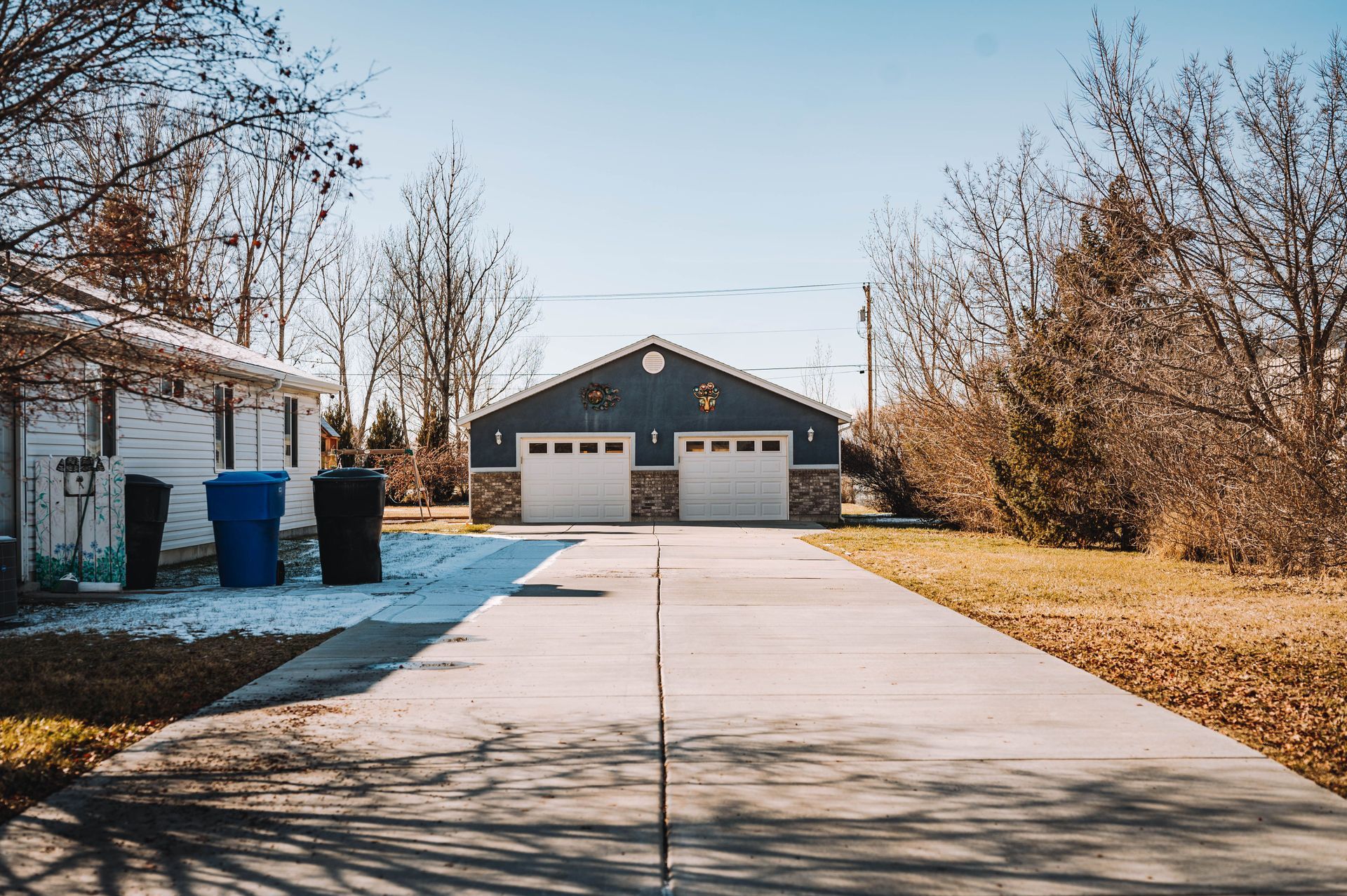
What Proper Parking Pad Installation Requires
The process starts with identifying where runoff currently flows across the proposed pad location, since redirecting water incorrectly can create flooding against foundations or pooling in adjacent areas. Subgrade preparation involves removing organic material and unstable soil, then compacting a rock base in lifts to prevent settling under repeated vehicle loads. The thickness of both the base and the concrete slab depends on whether the pad will support passenger vehicles or heavier equipment like landscaping trailers and campers.
Once the pad is finished and cured, you will notice a firm, level surface that vehicles can park on year-round without sinking, rutting, or creating mud. The concrete will shed water rather than absorbing it, and if the pad was graded correctly during installation, runoff will move away from structures and toward appropriate drainage paths. Grass and landscaping around the pad remain intact because vehicles no longer drive across them to reach parking areas.
Some installations require rebar dowels if the pad connects to an existing driveway or walkway, creating a mechanical tie that prevents differential movement between the old and new sections. Pads that stand alone typically use wire mesh or rebar grid for internal reinforcement, and control joints are cut or formed to manage where cracking occurs as the concrete responds to temperature changes.
Questions Before Starting Your Project
Homeowners in Augusta often ask about the planning and construction process before committing to a parking pad installation.
- How do you determine the right size for a parking pad? The dimensions depend on the vehicles that will use the space, including door clearance for entry and exit, plus any turning radius needed if vehicles will back in or pull through. A single-car pad typically measures at least ten by twenty feet, but larger vehicles or multiple parking spots require different calculations.
- What happens if the pad location is currently sloped? Grading adjustments are made during excavation to create a level parking surface while maintaining proper drainage away from the pad. In some cases, this means cutting into a slope on one side and building up the opposite edge, then compacting fill material thoroughly before placing the base and concrete.
- Why does the base thickness matter for a parking pad? A compacted rock base distributes vehicle weight across the subgrade and prevents the concrete from settling unevenly, which causes cracking. The base depth increases when the subgrade consists of soft clay or when the pad will support heavier loads than standard passenger cars.
- When should control joints be added to parking pads? Control joints are placed to create panels that limit random cracking as the concrete expands and contracts with temperature changes. For pads larger than a single vehicle space, joints typically divide the surface into sections no larger than ten feet in either direction.
- What preparation is required before the concrete crew arrives? The installation area should be cleared of obstacles like landscaping stones, downspouts that would interfere with formwork, and any underground utilities that need to be marked. Access for concrete trucks and equipment must be confirmed so material can be placed efficiently without damaging other parts of the property.
Todd Concrete Solutions evaluates site-specific conditions during the planning phase to address drainage, access, and load requirements before work begins. Arrange an on-site consultation to review your property layout and vehicle storage needs.
