
Sectional Concrete Replacement
Fixing Failed Sections Without Removing Everything
Sectional Concrete Replacement in Augusta for isolated damage, settling, or cracking in specific driveway areas
One or two sections of a driveway can fail while the rest of the surface remains structurally sound, typically because water eroded the base in a localized area, a tree root disrupted the subgrade beneath that section, or a utility repair left unstable backfill under part of the slab. Todd Concrete Solutions cuts out the damaged sections, corrects the base issue that caused the failure, and pours new concrete that integrates with the surrounding surface. This approach makes sense when less than thirty percent of the total driveway shows damage and the remaining concrete has no significant cracking or settlement.
Sectional replacement begins with saw-cutting clean lines around the damaged area to create straight edges that the new concrete can bond against, then removing only the compromised material rather than tearing out the entire driveway. The exposed subgrade gets evaluated to determine whether water infiltration, soil movement, or inadequate base depth caused the failure.
Arrange an on-site consultation to identify which sections require removal and whether the surrounding concrete remains stable enough to justify a sectional repair.
How New Concrete Ties Into Existing Slabs
The transition between old and new concrete requires mechanical connection to prevent the replaced section from separating or settling independently over time. Rebar dowels get drilled horizontally into the edges of the existing concrete, extending into the area where new concrete will be poured, which locks the two sections together and distributes load across the joint rather than allowing movement at the seam.
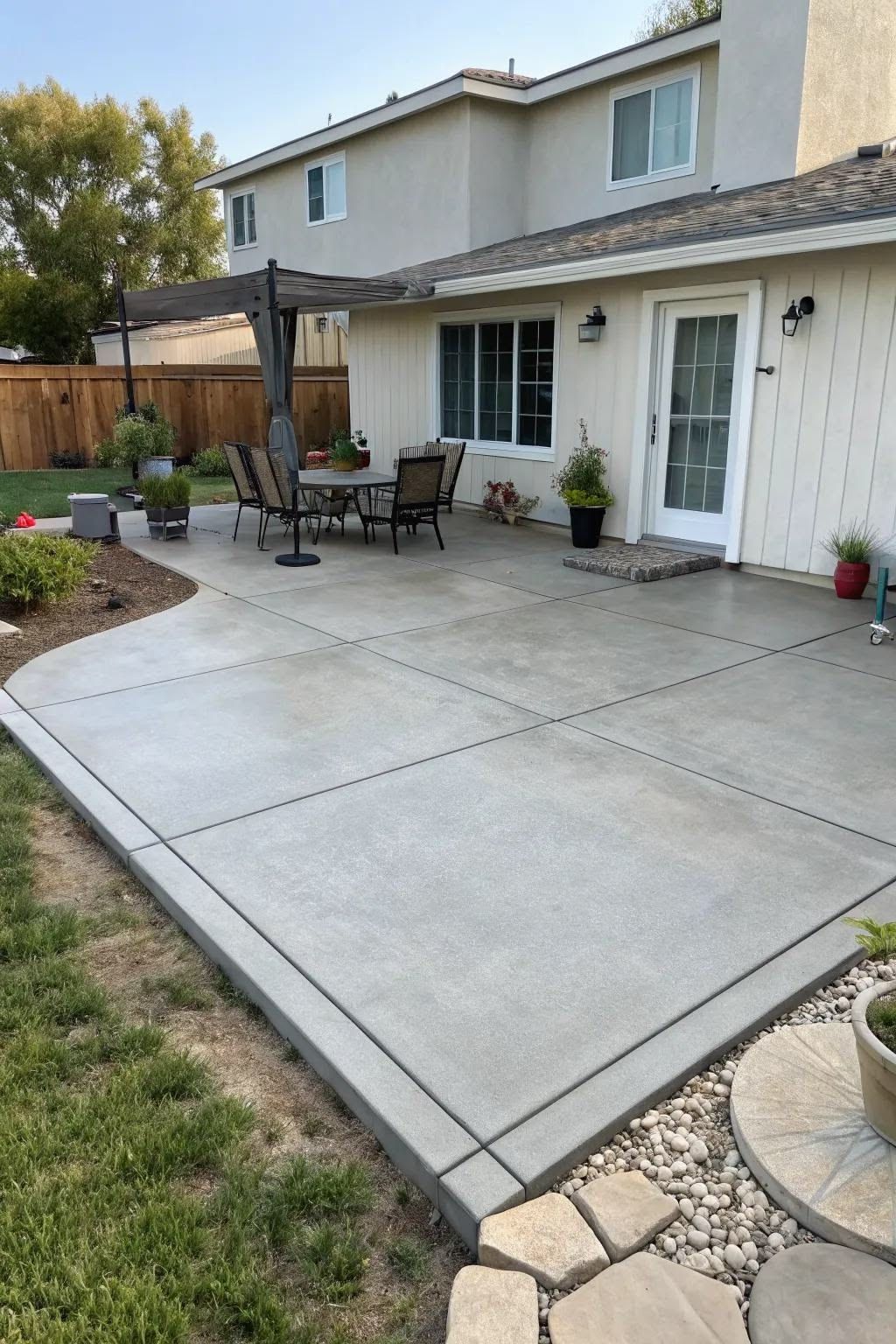
After the replacement section cures, the new surface sits flush with the surrounding driveway, the joint between old and new concrete remains tight without gaps or height differences, and the repaired area no longer collects water or shows the cracking pattern that previously developed. The color of new concrete will appear lighter initially but weathers over several months to blend more closely with older sections.
Sectional replacement works when the base failure is localized and the surrounding concrete shows no signs of imminent distress, but it does not address conditions where multiple areas have begun to fail or where the entire rock base has degraded throughout the driveway. In those situations, a full replacement becomes more practical than repairing individual sections in stages.
Answers to Frequent Service Questions
Homeowners considering sectional concrete replacement typically want to understand whether repairing part of the driveway will hold up as well as replacing the whole surface, and how the process differs from a complete tearout.
- How do you decide where to cut the section boundaries?
- Cuts are placed at logical joint locations or far enough beyond visible cracking to reach concrete that still has structural integrity, which prevents the damaged area from extending into the new section after installation.
- What causes one section to fail while others remain intact?
- Localized base erosion from downspout runoff, tree roots growing under a specific area, or utility trenches backfilled with unsuitable material create isolated weak points that affect only part of the driveway while the rest sits on undisturbed, stable ground.
- Why use rebar dowels instead of just pouring concrete against the cut edge?
- Concrete poured against an existing slab without mechanical connection can separate at that joint as temperatures change or as the ground shifts, which eventually creates a visible seam and allows the new section to settle independently.
- How long before the new section can handle vehicle traffic?
- Concrete typically requires seven days to cure sufficiently for normal vehicle use in Augusta's climate, though full strength develops over several weeks as the curing process continues.
- When does sectional replacement cost more than it saves compared to full replacement?
- If evaluation reveals that more than four or five separate areas need sectional repairs, the combined cost of multiple mobilizations, saw cutting, and doweling often approaches the cost of removing and replacing the entire driveway in one project.
Todd Concrete Solutions evaluates whether sectional replacement addresses the root cause or simply delays a larger project, based on the condition of the surrounding concrete and the extent of base deterioration found during removal. Set up a property assessment to review your driveway and discuss whether sectional or complete replacement makes more sense for your situation.
